
When you plan on getting yourself a portable generator, there are a few things you need to consider. Among them, some are vital. Furthermore, what better way is there to decide whether or not you want to get machinery than making a pros and cons list?
Whether you live on a hiking or a caravan, or maybe you’re searching for your regular energy backup. The right generator for your particular needs is a must. Your engine can provide all types of electrical machines and appliances without grid power.
With all the consideration, we’ve prepared an article consisting of everything you’ll need to know about portable generators. The pros and cons will also be discussed. Hence, without any further ado, let’s start!
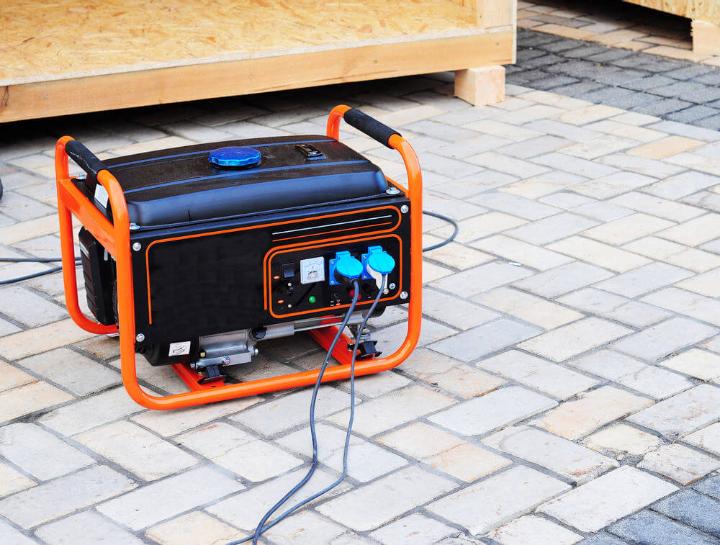
What Are Generators In General?
Let’s begin with a distinction between inverter generators and conventional generators. Since both are used for the same purpose, prospective buyers appear to be confused by the difference between them.
The resulting decrease in electricity consumption means that you do not have to change the fuel tank quite frequently. Inverter generators also emit fewer emissions and are typically very quiet.
A generally used generator will use its throttle during the entire usage period. That will undoubtedly produce more noise. This happens because of the difference in the engine rev process.
Remember that both generators create alternating electrical current or A/C electricity. This is achieved by translating mechanical resources into electricity. Portable generators typically rely on a coal, diesel, or propane engine.
Portable Inverter Generators: How Do They Work?
The inverter generator transfers A/C energy to D/C power and back to A/C power, offering a much cleaner power supply that is much less likely to impact components such as microprocessors that provide the power that might be prone to small adjustments in generator output.
The inverter generator’s main job is to produce an alternating direct current through the help of electricity. For example, it draws energy from an electrical source, a car battery, or a solar panel and uses an electronic circuit to “invert” direct current to alternating current. When inverting the D/C power to A/C energy, the output is a continuous uniform electrical signal.
Filtered correctly, it has the same properties as a broad alternating current. It is also safer for devices and other fragile equipment, such as laptops and personal notebooks, to snap when electricity surges.
Portable generators implement two primary principles. Portable generators tend to create an AC, which will continuously change its frequency. This will happen with respect to the rotation-per-minute of its engine.
The higher speed of the engine means higher frequency. This generates more current at higher speed. In the same way, lower speed emits less current.
Stability in the produced current is also one of the main reasons why inverter generators produce much less noise than conventional portable generators.
Cons of Inverter Generator:
Conventional turbines operate an engine frequently rotating a rotor at full tilt, producing usable AC power. This power differs in engine lag and standard raw output. The new generators carry the raw AC to a much cleaner DC signal power. Afterward, the produced DC current will alternate itself with different frequencies.
This huge generator technological advance entails costs. Above everything, the unit’s cost. Off-shelf generators will cost you more. They give spectacular price advantages, so you’ll pay for what you want.
Compact size, shorter running times, better engines, quieter operation, clearer power signal – you’ll surely be getting all of this one go. However, one of the biggest cons is the price tag that tags along. When you expect such features, it’s obvious that you will face a bill much higher than that of a conventional generator.
However, we will recommend getting a high-end generator that serves you well for the long run instead of getting a faulty, cheap generator.
Pros of Inverter Generator:
Parallel Mode Feature:
Many lightweight inverter generators have parallel modes. You may connect a second (identical) generator and double the single generator output together.
The saving grace for this generator class functions for a duplicate generator in “parallel mode,” but that’s predicated on having a second generator to link to the computer to boost electricity.
This is helpful if you don’t need the larger performance capacity but want to leave the emergency option. This can also be useful by separating the generators and running them separately for normal hours, and restoring them if required for larger events.
Fuel Saving Technology:
Fuel output is a fantastic side-effect for a better engine. Since the inverter governs, it ramps up or down the throttle depending on the current draw. In older turbines, the turbine turned the rotor at one speed, using what power you wanted.
Through the inverter, you draw power, and the motor spins the generator to send you the right output, no more, no less. The engine throttle reacts accordingly as the current pull ebbs and falls, and varying speeds also save you fuel and energy instead of full strength.
More Mobility:
Saving oil also makes a greater fuel tank. Adding a smaller fuel tank contributes compact and lighter size than the generator’s own, making a truly compact, portable engine. Your old conventional generator was lightweight, and you could attach a pair of wheels and pull it out of the driveway and place it on a truck bed. All the power can be hoisted with one arm and carried behind the floorboard bench.
Silenced Feature:
Both this size decrease and the running output produces a quieter inverter generator. The motor is smaller because it doesn’t have to labor too hard; the unit’s fully lightweight construction is easily embedded in a sealed structure that renders the generator virtually quiet compared to the conventional open frame generator.
Many inverters operate between 50dB and 60dB when they’re specifically made to be a quiet generator. The right to chat and be heard when running the generator might be the nicest “pro” on this list once we get past the operational numbers.
Conclusion:
Let’s be truthful; if you don’t understand what you’re up against, it’s hard to know what resources you’re going to require. All the generators have their pros and cons. Hence, it’s up to you to decide what kind suits you.
Let’s hope our article made you understand which generator will satisfy your particular needs.